Social media is a place for communication, a modern town square of sorts. But for a while now, it’s also been a place where creators share their work and get paid for it. It’s a place where regular people become celebrities, and up to this moment, they have been largely dependent on platform policies. Every centralized social media platform dictates what can and can’t be shared, and sometimes outright limits creators or cuts them off from the audience. Decentralized spaces offer a different approach.
What is SocialFi?
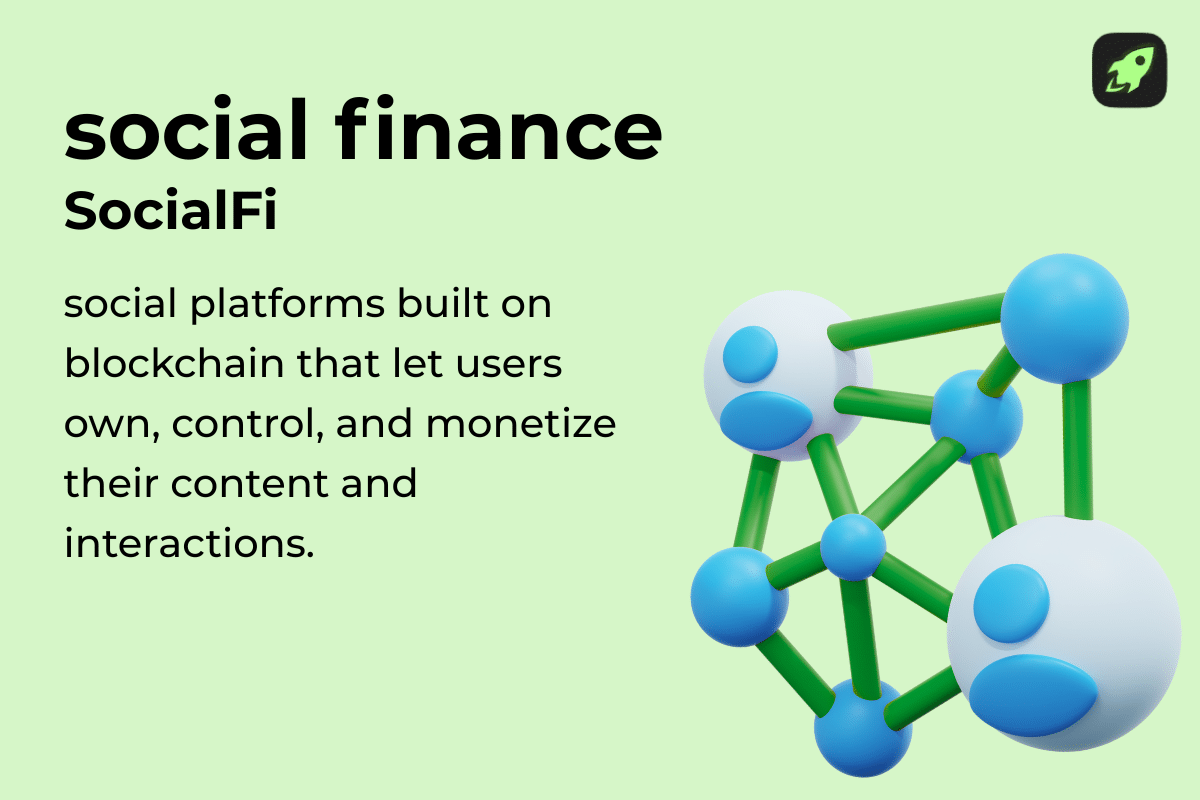
SocialFi combines social media and cryptocurrencies to allow content creators to earn on their posts and engagement without oversight from large centralized platforms. Instead of relying on big centralized companies to control visibility, ad revenue, or payouts, SocialFi uses crypto tokens and blockchain technology to reward engagement, posts, and community activity. People can earn for likes, comments, or contributions, and in some cases even own shares of their favorite creators or communities through tokenized systems. Because it runs on decentralized networks, creators keep more control, users have more privacy, and monetization becomes more transparent and fair.
Why Do Web2 Socials Need Fixing?
Traditional social media platforms have become huge, but they come with major problems that Web2 never really solved. A few central authorities control everything—your data, your digital identity, your reach, and even whether your posts stay online. Users create all the content and all the social media engagement, yet they get none of the value. There is no digital ownership, no sustainable economic model, and no way to directly monetize your social influence without ads or brands. Centralized censorship decisions can remove publicly viewable posts without warning, and creators have little control over their own communities.
This is why SocialFi platforms are emerging. By combining social media with decentralized finance, they enable users to earn in-app utility tokens, gain greater control, participate in platform governance, and build meaningful brand equity in a decentralized environment. SocialFi offers a fresh model where user activity plays an important role and gets rewarded.
How SocialFi Works Under the Hood
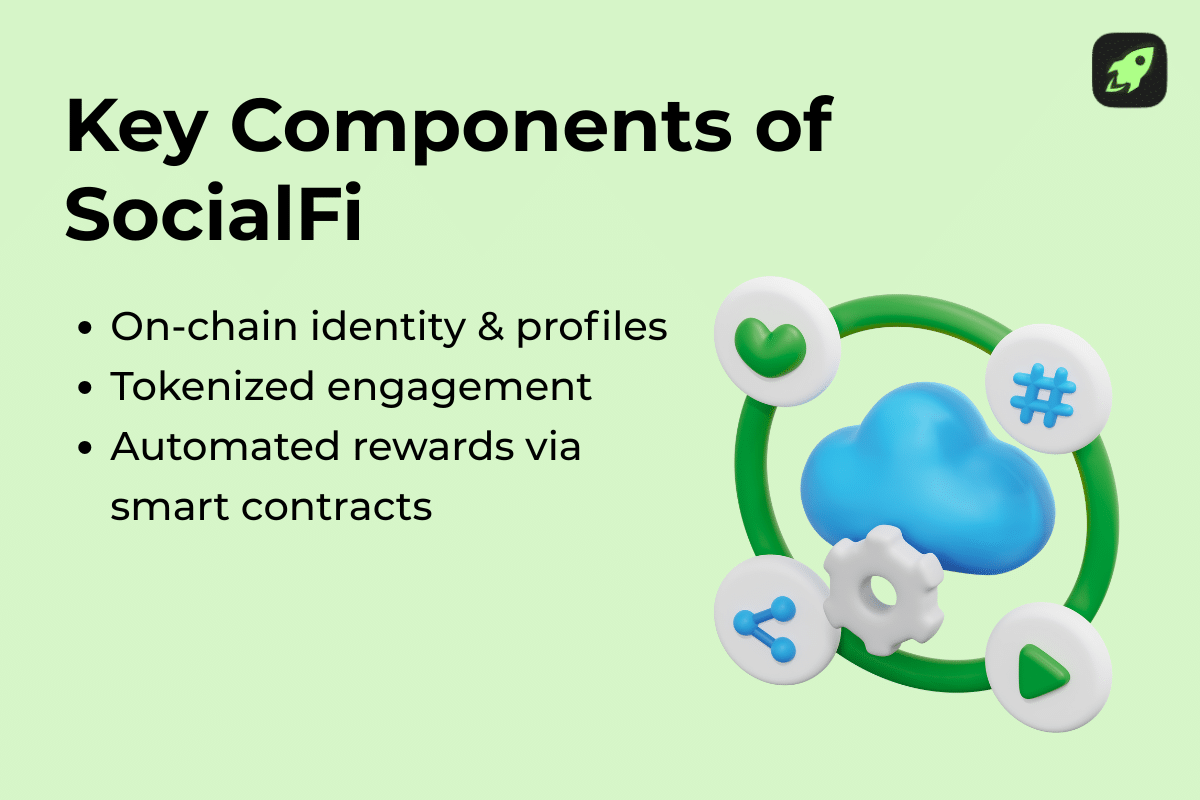
SocialFi platforms use blockchain and decentralized applications to manage identity, content, and rewards. Every action—posts, likes, follows, public social interactions—becomes part of a transparent system where users can earn social tokens or in-app utility tokens based on their activity. Smart contracts automate incentive sharing, prevent centralized censorship decisions, and help create safer, more economically sustainable social networks.

How to Get Free Crypto
Simple tricks to build a profitable portfolio at zero cost


Each SocialFi project runs its own token economy, giving users digital ownership and more control over their social following. Native tokens or those issued by influencers can unlock exclusive content, signal social clout, or be traded like other digital assets. Some platforms even use decentralized autonomous organizations (DAOs) for governance, meaning users vote to determine the platform’s rules and future. This decentralized approach solves key design issues of Web2 and helps SocialFi apps scale towards mass adoption.
Learn more: Types of Cryptocurrencies Explained
What Makes a SocialFi Platform Different?
A SocialFi platform stands apart from traditional social media platforms because it treats every user as a participant in the network. Many creators had an issue with other platforms, since they were seen as a source of free content. SocialFi works differently, not focusing on building value for the platform itself, but instead providing users with tools to grow their brand. Content creators become an essential element in the economy of the platform but it’s not similar to being a cog in the machine. It’s more akin to being part of a symbiotic ecosystem and reaping the benefits accordingly.
SocialFi networks offer transparency—the platform’s code and economics are open and resistant to control by a single central authority.
SocialFi platforms offer features like:
- Token-based access to exclusive content
- User-driven platform governance
- Identity management
SocialFi projects build their own economies, they don’t just follow the model offered by traditional social media. User activity translates into incentives, which encourages both high-quality content and active participation. The result is a more detailed and thorough approach to user-generated media.
Benefits of SocialFi for Users and Creators
SocialFi focuses on influencer comfort, but gathering content creators is not enough. A platform is only as popular as the number of users. So naturally, SocialFi projects have to offer something to viewers and consumers of content. In other words, attracting new users is one of the essential goals for SocialFi. Let’s take a look at the significant benefits these platforms can provide for users and creators.
Benefits of SocialFi for Users
- You have full control over your own profile and data.
- You can follow your favorite creators and contribute directly to their growth.
- Token-gated posts, communities, and perks open new ways to participate.
- You depend less on centralized servers, which reduces data misuse.
- Platform changes are implemented after user approval.
Benefits of SocialFi for Creators
- You can earn through social tokens, NFT drops, tipping, in-app tokens, and revenue-sharing mechanisms.
- There is no big platform taking 40–60% of your earnings just for hosting your account.
- Your token builds a long-term, sustainable economic model with real market value.
- Decentralized platforms reduce the risk of sudden bans or demonetization–withdrawal of tokens from use.
- You keep your audience even if a platform shuts down.
- You can build a more loyal fanbase thanks to social tokens.
Problems and Risks of SocialFi
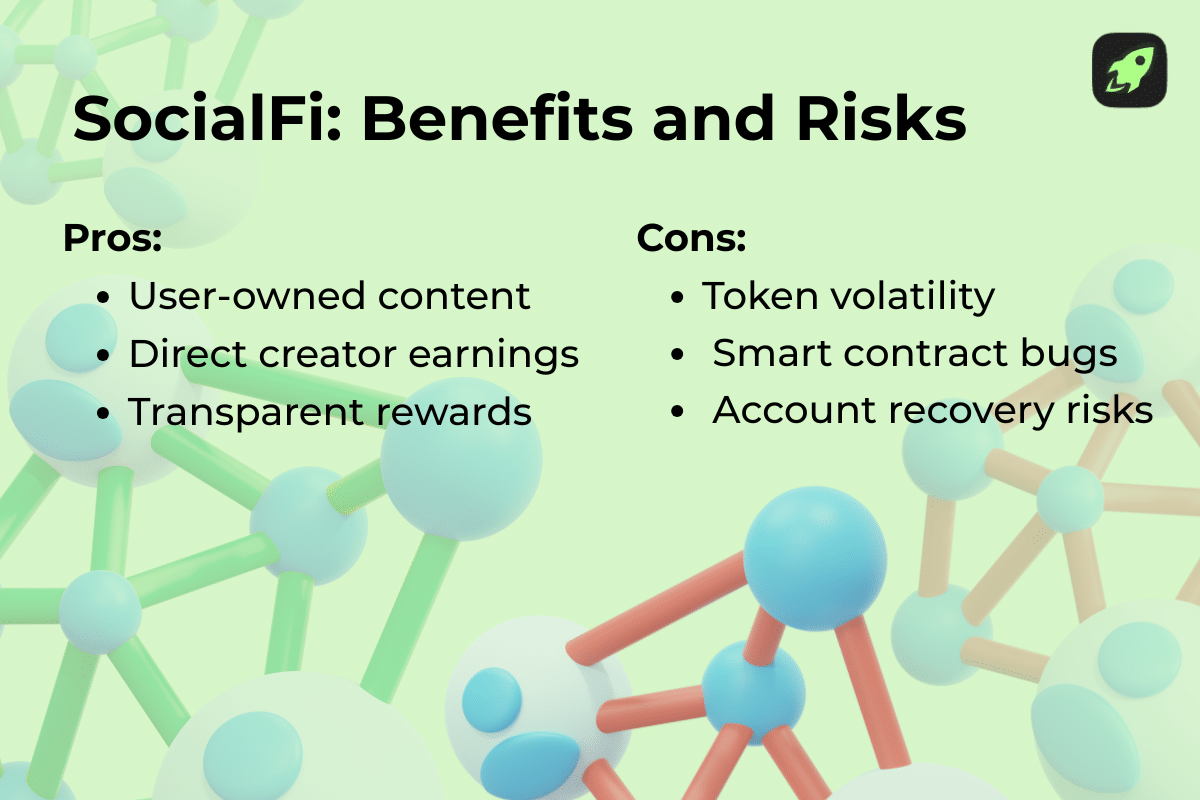
SocialFi platforms promise more power and better rewards, but they also come with risks that users can underestimate. Because SocialFi blends decentralized finance with social media interactions, any mistake can directly translate into financial loss.
Token speculation is one major issue. Social tokens or native tokens tied to creators or communities can become extremely volatile, making it hard to build meaningful brand equity or economic sustainability.
Another risk comes from identity management. Without a central authority, recovering a lost wallet or compromised account on a SocialFi platform can be nearly impossible.
The decentralized nature of these networks also means harmful content can spread faster, because there’s no simple way to prevent centralized censorship decisions. On top of that, many SocialFi apps rely on emerging technology, and bugs in the platform’s code may expose users to exploits.
Creators face risks too. Their entire income can depend on a fluctuating token price, while incentive sharing mechanisms can be gamed by bots or people farming rewards. Even well-known SocialFi projects like Lens Protocol or Stars Arena have faced scaling issues because more users means higher pressure on identity systems, in-app tokens, and the social network itself. Until SocialFi fully matures, these risks remain important to understand.
Top SocialFi Platforms to Know
If you are exploring SocialFi for the first time, a few platforms already stand out as early leaders in this space. Each one takes a different approach to mixing social media interactions with decentralized finance and introducing new economic models that traditional social media platforms simply can’t offer.
- Friends.tech became one of the first SocialFi platforms to reach mass adoption by letting users buy and sell “shares” tied to people’s social clout. These shares function like social tokens—they unlock access to chats, exclusive content, and direct creator interactions. Its design shows how SocialFi enables new monetization paths while letting users participate in a creator’s own economy. The downside is that token prices can move fast, but the platform proved how strong demand is for a social network built around markets.
- Lens Protocol takes a very different decentralized approach. Lens runs on-chain and uses a modular system of decentralized autonomous organizations. Every social action—following, posting, commenting—becomes a digital asset you own. This prevents developers or platforms from deleting your content or shutting down your account. Lens also allows third-party apps to plug into its social graph, which solves key design issues around identity and encourages a diverse range of SocialFi apps.
- Theta Network focuses on video, streaming, and creator communities. It lets users earn native tokens by sharing bandwidth, improving quality, and helping the network run more efficiently. Theta brings SocialFi to the wider social media industry by rewarding engagement and distributing value across the entire ecosystem.
These SocialFi platforms show how social media can evolve into something more open, more rewarding, and far more community-driven.
Real-World Examples of How SocialFi is Used
SocialFi isn’t just theory—it’s already happening across multiple platforms that blend social interaction with crypto rewards. Here are real examples showing how SocialFi enables users to earn, own, and control their digital presence.
SocialFi Platforms Rewarding Engagement (friend.tech, Stars Arena)
Apps like friend.tech (on Base) and Stars Arena (on Avalanche) let creators tokenize their social presence. When someone buys a creator’s “key” or “share,” both the creator and the buyer earn rewards. These SocialFi platforms turn simple interactions into economic activity, and creators bypass a central authority while deciding their reach.
Digital Ownership Through Social Tokens (Lens Protocol)
Lens Protocol is one of the best examples of true digital ownership. Every post, comment, and follow becomes an NFT stored on-chain, so users own their data instead of handing it to big platforms. With Lens profiles, communities can issue social tokens that grant access, governance rights, or exclusive memberships, creating mini-economies around creators and projects.
Direct Monetization and Creator Economies (Rally, BitClout/DeSo)
Platforms like Rally and DeSo (BitClout) show how creators can directly monetize their communities. Fans buy a creator’s own token to unlock exclusive content, early access, or special perks. Because these tokens function like other traded assets, creators benefit from their rising value as their social clout grows.
Open Campus and Tokenized Education
Open Campus, backed by Binance Launchpad, brings SocialFi into education. Teachers, tutors, and educational creators tokenize their content so communities can support them directly. Students can help fund creators, while educators earn from their expertise using social DeFi tokens, building sustainable “learn-to-earn” ecosystems.
What’s Next for SocialFi?
Like most growing trends, SocialFi has unlimited potential. In a space, where everyone aspires to become a digital creator, these platforms have an opportunity to create an economy, in which all the participants can benefit equally.
SocialFi will, no doubt, utilize AI apps and technologies, as well as cross paths with the metaverse.
The main roadblock is adoption. As traditional social media platforms fight for users’ attention, inventing new ways to attract creators and big brands, SocialFi projects can and should develop their own approach. Preferably, one that doesn’t rely on ads and micromanagement. If they manage to crack that puzzle, there’s no stopping them.
Final Thoughts
SocialFi is still young, but it’s already changing our expectations from social networks. For the first time, users and creators can own their content, earn from their activity, and take part in the decisions that affect the platform they use. SocialFi is building a new layer on top of Web2, where social media, crypto, and digital ownership work together. If SocialFi continues evolving in a way that rewards communities rather than corporations, it could become the foundation of a more open, fair, and creator-driven internet.
FAQ
Is SocialFi the same as DeFi or NFT platforms?
Not exactly. SocialFi uses ideas from DeFi and NFTs, but focuses on social media. You can think of it as “social networks powered by crypto.” It’s about owning your content, earning from engagement, and avoiding centralized control — not just finance or collectibles.
Do I need to buy crypto to use SocialFi platforms?
Sometimes, but not always. Some apps let you join for free and only use crypto if you want to buy creator tokens or unlock features. Others require a small amount of crypto to start. It depends on the platform.
Can SocialFi replace traditional social media?
Not yet. Traditional platforms still dominate because they’re easy and familiar. But SocialFi offers more ownership and freedom, so it could grow into a strong alternative over time — especially for creators who want more control.
How do creators make money with SocialFi?
Creators earn through things like social tokens, paid access, NFT posts, tipping, and revenue-sharing. When fans buy the creator’s tokens or unlock their content, the creator gets a cut. More engagement = more earnings. It basically monetizes influence directly without middlemen.
Disclaimer: Please note that the contents of this article are not financial or investing advice. The information provided in this article is the author’s opinion only and should not be considered as offering trading or investing recommendations. We do not make any warranties about the completeness, reliability and accuracy of this information. The cryptocurrency market suffers from high volatility and occasional arbitrary movements. Any investor, trader, or regular crypto users should research multiple viewpoints and be familiar with all local regulations before committing to an investment.
The post What is SocialFi? A Beginner’s Guide to Web3 Social Media appeared first on Cryptocurrency News & Trading Tips – Crypto Blog by Changelly.